What Is Ringworm in Cats? Signs, Treatment, and Prevention


Photo by Marc Andreu/iStock/Getty Images Plus
Ringworm in cats is actually caused by fungi, not worms.
It’s a very contagious skin condition that can affect many species, including humans, but cats are at particularly high risk.
Understanding the signs of ringworm in cats and getting prompt veterinary care can help protect both your cat and your family from this disease.
Key Takeaways
- Ringworm in cats is a fungal skin infection, not a worm, and it most often affects kittens, seniors, immunocompromised cats, and those in crowded spaces, like shelters.
- Signs include patchy hair loss, flaky skin, and itchiness, though some cats show no symptoms and can still spread the infection.
- Ringworm can spread easily to other animals and people, so quick treatment is crucial.
- Diagnosis and treatment require veterinary care, with options ranging from topical therapies to oral antifungal medications.
What Is Ringworm in Cats?
Cat ringworm, also called dermatophytosis, is caused by infection of the skin, fur, and nails with certain types of fungi known as dermatophytes.
While any cat can develop ringworm, some populations are at higher risk:
- Kittens
- Immunocompromised cats
- Senior cats
- Cats with skin damage
- Cats who live in warm, humid environments
- Cats in crowded environments, like shelters
- Persians, Scottish Folds, and long-haired cats who are predisposed
What Are the Signs of Ringworm in Cats?
While symptoms of ringworm vary by cat, signs often include:
- Hair loss in patches or circles
- Itchiness
- Flaky or crusty patches of skin
- Brittle or misshapen nails
- Darkened skin
- Skin nodules (rare)
Some cats with ringworm have no symptoms but are still able to pass the disease on to other animals or people.
Pictures of Ringworm in Cats
While it’s impossible to diagnose cat ringworm based on appearance alone, here are a couple of examples of what ringworm in cats might look like.
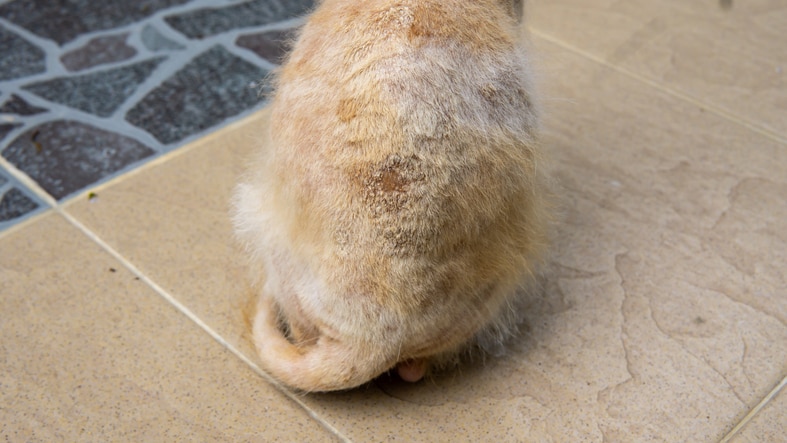
Photo by Aiman Khair bin Samsol Hairi/iStock/Getty Images Plus
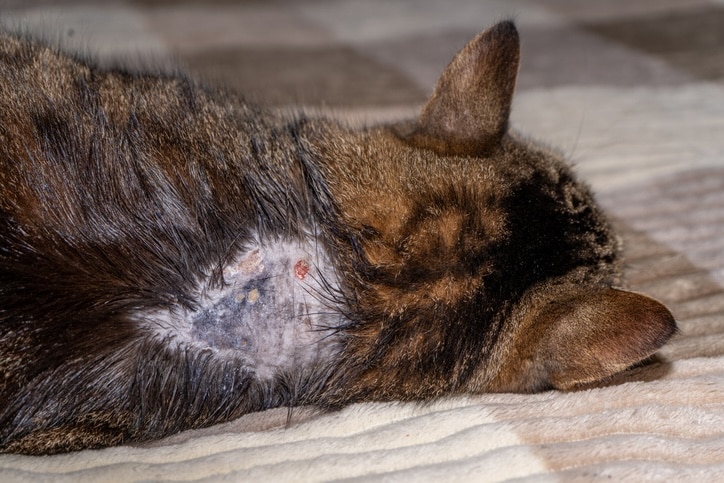
Photo by A.Greeg/iStock/Getty Images Plus
What Causes Ringworm in Cats?
How do cats get ringworm? There are a few common sources of exposure:
- Direct contact with infected animals and people. This is the most common transmission route.
- Contaminated environments and objects. Fungal spores can survive on surfaces for months or even years.
- Soil exposure. Though less common, some types of dermatophytes live in soil and can infect cats.
How Vets Diagnosis Ringworm in Cats
If you suspect your cat has ringworm, schedule an appointment with your veterinarian as soon as possible.
While ringworm is not a medical emergency, early diagnosis and treatment can prevent its spread to other pets and family members.
Your vet will perform a physical examination and may perform skin scrapings and cytology to rule out other common causes of skin problems in cats.
If they suspect ringworm, diagnostic tests often include:
- Wood’s lamp examination: Some—but not all—types of ringworm glow when exposed to an ultraviolet light called a Wood’s lamp. This test cannot diagnose ringworm on its own, but it is used to identify areas for further testing.
- Fungal culture: Your veterinarian will pluck hairs near lesions or brush your cat’s coat with a sterile toothbrush and put these samples in a special culture medium that supports fungal growth. Any fungi that grow will be examined under a microscope and identified. Fungal culture is the best way to diagnose ringworm, but results can take several weeks.
- PCR test: Polymerase chain reaction (PCR) tests for ringworm are available and can provide results more quickly than fungal cultures but do not appear to be as reliable.
- Skin biopsy: In rare cases, a skin biopsy may be needed to definitively diagnose ringworm.
Your veterinarian may also recommend screening other pets in your household.
How To Treat Ringworm in Cats
Treatment depends on the severity of your cat’s infection. For milder cases, topical treatments might do the trick:
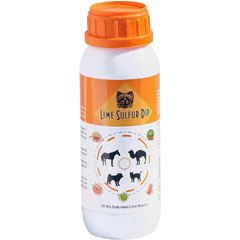
- Lime sulfur dip: Your vet may recommend a lime sulfur dip, like the Healthy Paw Life Pet Care Itchy & Dry Skin Lime Sulfur Flea & Tick Dip or the Vet Basics Lime Sulfur Dip Antimicrobial. Be aware that lime sulfur has a strong smell, like rotten eggs, and can temporarily stain light-colored fur and fabrics yellow.
Recommended Products

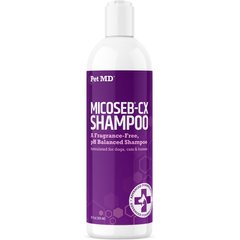
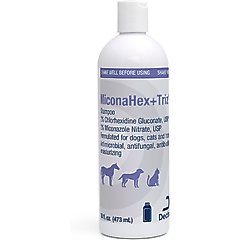
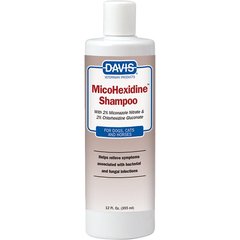
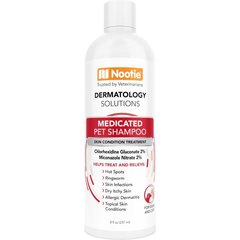
- Medicated shampoo: Shampoos containing 2% chlorhexidine and 2% miconazole have antifungal activity. There are several strong options available, including the Pet MD Micoseb-CX Anti-Fungal Medicated Pet Shampoo, the MiconaHex+Triz Shampoo, Davis MicoHexidine Dog & Cat Shampoo, and Nootie Medicated Antimicrobial Shampoo.
Recommended Products
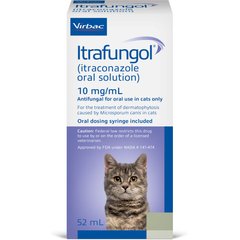
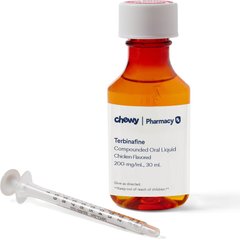
Oral medications may be needed in more severe cases. Itraconazole and terbinafine are both very effective, but ask your veterinarian about the best medication and dosage for your particular cat.
Recommended Products
Long-haired cats can benefit from being shaved. This allows topical medications to better reach the skin and removes contaminated fur that could spread spores throughout your home.
Most pet parents will want veterinary staff, or even a willing groomer, to help with this, but if you’re experienced and can handle it on your own, try the Bousnic Energy Saving Dog & Cat Grooming Clipper.
Recommended Product

It’s also important to remove fungal spores from your environment. Routine household cleaning usually does the trick:
- Wash and dry all potentially contaminated bedding, clothing, and towels.
- Vacuum floors, rugs, furniture, and other surfaces thoroughly.
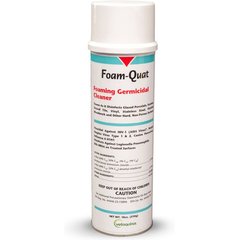
- Disinfect hard surfaces with a cleaner that kills fungi, like Vetoquinol Foam Quat Dog & Cat Stain Remover.
Recommended Product
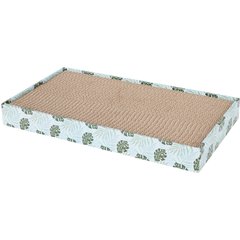
- Replace items that cannot be cleaned well, such as cardboard scratchers. Try the Frisco Step-In Cat Scratcher Toy with Catnip.
Recommended Product

Treatment usually lasts several weeks to months and should be stopped only once your cat begins to regrow normal hair or nails and fungal cultures confirm the infection is gone. Stopping treatment too early can cause a relapse.
Your veterinarian will know when it’s safe to return to normal.
How Can I Help My Cat Feel More Comfortable?
Sometimes a cat with ringworm needs to be isolated to prevent the disease from spreading—in a home with young children, for example. If isolation has been recommended, set up a “kitty apartment” in an easy-to-clean room that provides:
- Food and water
- A litter box, like the Frisco High Sided Cat Litter Box, Extra Large
Recommended Product

- A comfy, washable bed, like the Bedsure Round Orthopedic Bolster Anti-Slip Puppy & Kitten Bed with Washable Pillow Cushion
Recommended Product

- A disposable scratcher, such as the Frisco Double-Wide Cat Scratcher Toy with Catnip
Recommended Product
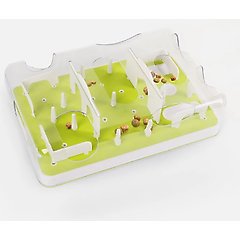
- Puzzle feeders and interactive toys, like the allforpaws Interactives Cat Puzzle Feeder Toy and the Potaroma 3 in 1 Automatic Interactive Butterfly Cat Toy
Recommended Products
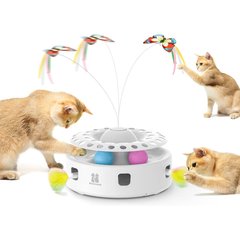
Cats who need to be isolated can become lonely and bored, so make sure you plan regular visits throughout the day—just wear gloves, and wash your hands and change your clothes when you’re done visiting.
How Do I Prevent Cat Ringworm?
Healthy, adult cats are usually resistant to ringworm, but you can still lower their risk:
- Quarantine new pets (especially kittens) who might have ringworm until they can be examined and cleared by a veterinarian.
- Wash your hands and change your clothes before interacting with your pets if you’ve been around other animals with ringworm.
- Keep your cat indoors where they are less likely to be exposed to dermatophytes from the environment or infected animals.
- Don’t share grooming tools between pets, especially if one of them has ringworm.
- Keep your cat’s skin healthy with regular parasite treatment, skin care to moisturize and protect, and omega-3 supplements—but check with your veterinarian first.
Recommended Products
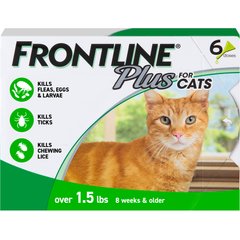

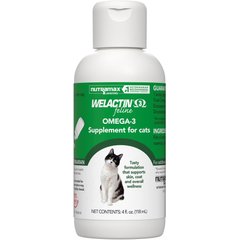
If your cat does develop ringworm, don’t panic. With appropriate care, cleaning, and patience, most cats make a full recovery.
FAQs About Ringworm in Cats
Is ringworm dangerous?
Ringworm is usually not dangerous in healthy cats, but it is very uncomfortable and should be treated promptly.
How contagious is ringworm from cats to humans?
Ringworm is very contagious and can be transmitted from cats to humans through contact with your cat or their living space. Call your doctor if you suspect you have ringworm.
Can cats get ringworm from litter?
Yes. It’s less common than direct contact with another infected animal, but cats can be exposed to ringworm from litter if dermatophyte spores are present there. For example, this may happen if an infected cat used the litter box.
Attributions