How Long Are Cats Pregnant?


Photo by Chewy
When the “cat distribution system” has a preggo feline show up on your doorstep, one of the first questions you’ll want answered is, “How long are cats pregnant?”
At just a little over two months, cat gestation periods are far shorter than a human’s. Knowing the exact timeline is key to making sure your cat gets the right care.
Key Takeaways
- Cats are usually pregnant for 60 to 65 days.
- It’s difficult to tell if a cat is pregnant for the first few weeks.
- Signs of a pregnant cat include enlarged, pink nipples; a growing belly; and behavioral and appetite changes.
- A cat pregnancy has three trimesters, each one lasting about 20 days.
- Signs of labor in a cat include acting more restless or agitated.
How Long Are Cats Pregnant?
The typical cat pregnancy ranges from 60 to 65 days. Like humans, cats don’t “show” right away, which can make it challenging to know their exact due date unless they were intentionally bred.
However, at around the two- to three-week mark, vets can sometimes feel a cat’s abdomen and tell that they’re pregnant. The kittens’ heartbeats can show up around week 3 or 4, and the Merck Veterinary Manual notes that kittens can be seen on X-rays around week 6.
What Are Signs That Your Cat Is Pregnant?
In the first few weeks, it’s nearly impossible to know that a cat is pregnant—even veterinarians often can’t tell. After that, the thickening of the uterine wall around each embryo starts to occur, and veterinarians can sometimes feel the kittens.
By week four to five, a pet parent would probably begin to notice subtle changes on their own.
Early signs of a cat pregnancy often include:
- A slightly rounder belly
- A pinker belly (easier to see on short- or light-haired cats)
- More prominent nipples
- Change in appetite (increased due to hunger, or decreased due to nausea)
- More needy or affectionate behavior
- More withdrawn behavior
As gestation progresses, more obvious signs of a cat pregnancy include:
- A notably rounder or pinker belly
- Weight gain
- Enlarged and pink nipples
- Nesting behavior
What Are the Stages of a Cat Pregnancy?
Cat pregnancy is divided into three trimesters, each about 20 days long.
First Trimester: 1–21 Days
During this early stage, fertilization occurs and embryos begin to develop, but there are no external signs that anything has changed.
Second Trimester: 21–42 Days
By week 3 or 4, tiny kitten heartbeats can be picked up by an ultrasound. By day 25, your vet should be able to hear them clearly. In this second trimester, pet parents may start noticing a rounder and pinker belly, as well aschanges in their cat’s behavior and appetite.
Third Trimester: 42–60+ Days
This is the homestretch for your pregnant cat. Signs of pregnancy become quite clear, with weight gain, a notably rounder and pinker belly, and enlarged, darker nipples. By day 50, your vet can tell how many kittens your cat will have, and you should start preparing a cozy space for your cat to nest and labor.
How Do I Know if My Cat’s in Labor?
You’ll know your cat is going into labor soon once she starts to become more restless. She may pace, scratch at her nesting area, lick her genitals, pant, or look nervous or agitated.
Many cats also stop eating about 24 hours before labor. Physically, your cat’s rectal temperature may drop below 100 F in the 24 hours before birthing, and milk often appears in her mammary glands 24–48 hours before delivery.
How To Care for Your Cat During Their Pregnancy
Since your cat is about to go through a significant change, it’s up to you to take care of her and make sure she’s comfortable.
See Your Vet
If you suspect your cat is pregnant, schedule a vet visit. Heartbeats can be heard around day 25, and your vet can accurately confirm pregnancy. They’ll also ensure your cat has the appropriate vaccinations to protect her and her newborns from disease and parasites, which may include a dewormer.
At day 50, your vet can determine the number of kittens. If you suspect something is not right at any point in your cat’s pregnancy, don’t hesitate to see your vet.
Set Up a Cozy Area at Home
It doesn’t have to be fancy, but a cozy area for your cat to nest and labor is one of the kindest things you can do for her. Pick a quiet area (like a closet or bathroom) and set up a nesting box with cozy blankets or a plush cat bed.
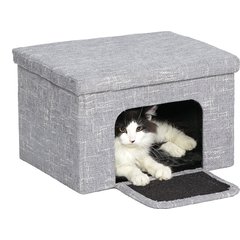
A cat condo—like the MidWest Curious Cube Cat Condo—or a large carrier works well. Line it with the Frisco Sherpa Reversible Cat Mat or Bedsure Waterproof Dog & Cat Blanket.
Recommended Products


Ensure Proper Nutrients
You’ll need to consider a food specially formulated for pregnant cats, such as Royal Canin Feline Health Nutrition Mother & Babycat Dry Cat Food.
Feeding your pregnant cat a high-quality kitten diet—approved by your vet—is another option, as they are both densely packed in extra protein, calories, and other vital nutrients like calcium and phosphorus to maintain your cat’s health and the health of the unborn kittens.
These diets also ensure your cat will have adequate milk production to feed her new kittens.
Recommended Product

Your vet may also want your cat to take a multivitamin, like Pet Honesty Dual Texture Chicken Flavored Multivitamin Omega-3 & Lysine Chews for Cats.
Recommended Product

Some experts recommend increasing your pregnant cat’s food by 50% at week 4, but always speak with your veterinarian before making any dietary changes.
Keep Her Entertained
Pregnant cats often nap more, but they’ll still benefit from gentle play and enrichment. Soft cat toys, interactive wands, and scratchers give her safe outlets for energy without overexertion.
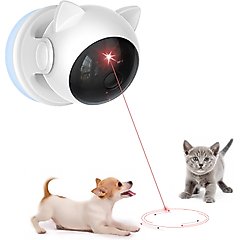
The Frisco Bird with Feathers Teaser Wand Cat Toy with Catnip makes for some fun bonding time, and the PawsPik Suction Cup Cat Laser Toy is great for when you’re away.
Recommended Products

All that’s left to do is wait—and welcome the sweetest new kittens.
FAQs About Pregnant Cats
How many kittens do cats have in one litter?
Cats usually have 4 to 6 kittens per litter, though litters can range from as few as one to as many as 12.
How long is a cat pregnant?
Cats are pregnant for roughly two months—about 60 to 65 days.
How can you tell how far along a cat is?
Look for physical changes, like enlarged, pink nipples around week 3 and a growing belly by week 4 or 5. An ultrasound or veterinary exam is the most accurate way to determine how far along your cat is.
Do cats usually give birth at night?
Yes, cats often give birth at night or in the early morning, when it’s quiet and they feel safest. However, labor can happen at any time of day.
Attributions