


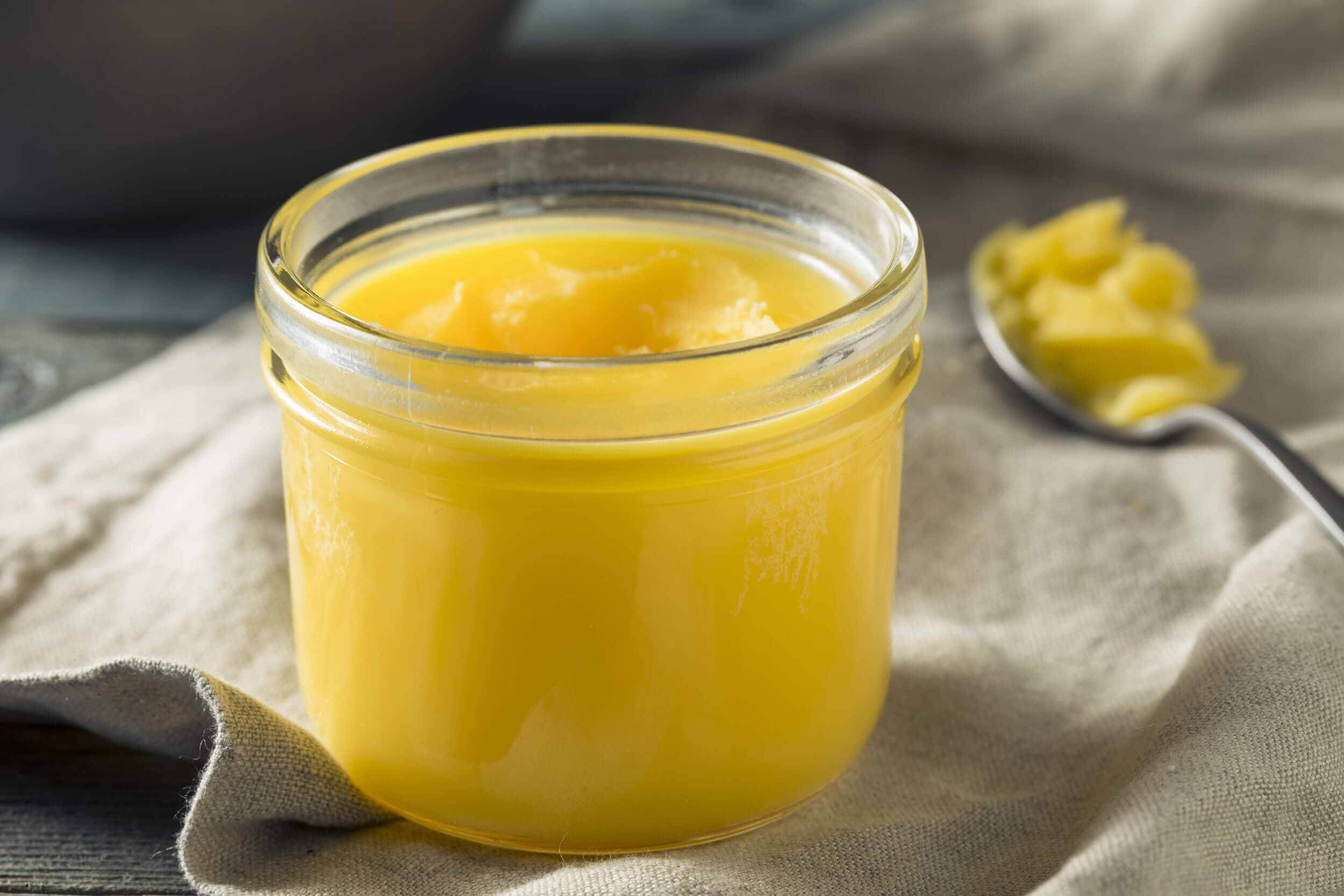
Making ghee at home is very rewarding. It’s excellent for gut health, a source of healthy fats that support digestion, and it’s very tasty!
Even though ghee seems trendy, it has been around for thousands of years, with use dating back to 2000 B.C., originating somewhere in Asia and used in Ayurveda as a therapeutic food. In ancient India, ghee was the preferred cooking oil. Just like many other foods, ghee may have been created by accident, as with many fermented foods.
Many Ayurvedic preparations are made by cooking herbs in ghee. This is a great idea! Whether it’s turmeric, rosemary, oregano or dried basil — all herbs are powerful superfoods.
The benefit of this is that the phytonutrients present in these herbs will be more readily absorbed into the body in the presence of fat (aka nutrient synergy!)
This is common sense, really, when you think that every cell in your entire body has a lipid (fat) layer. Therefore, eating fat with phytonutrients enhances their delivery to cells.
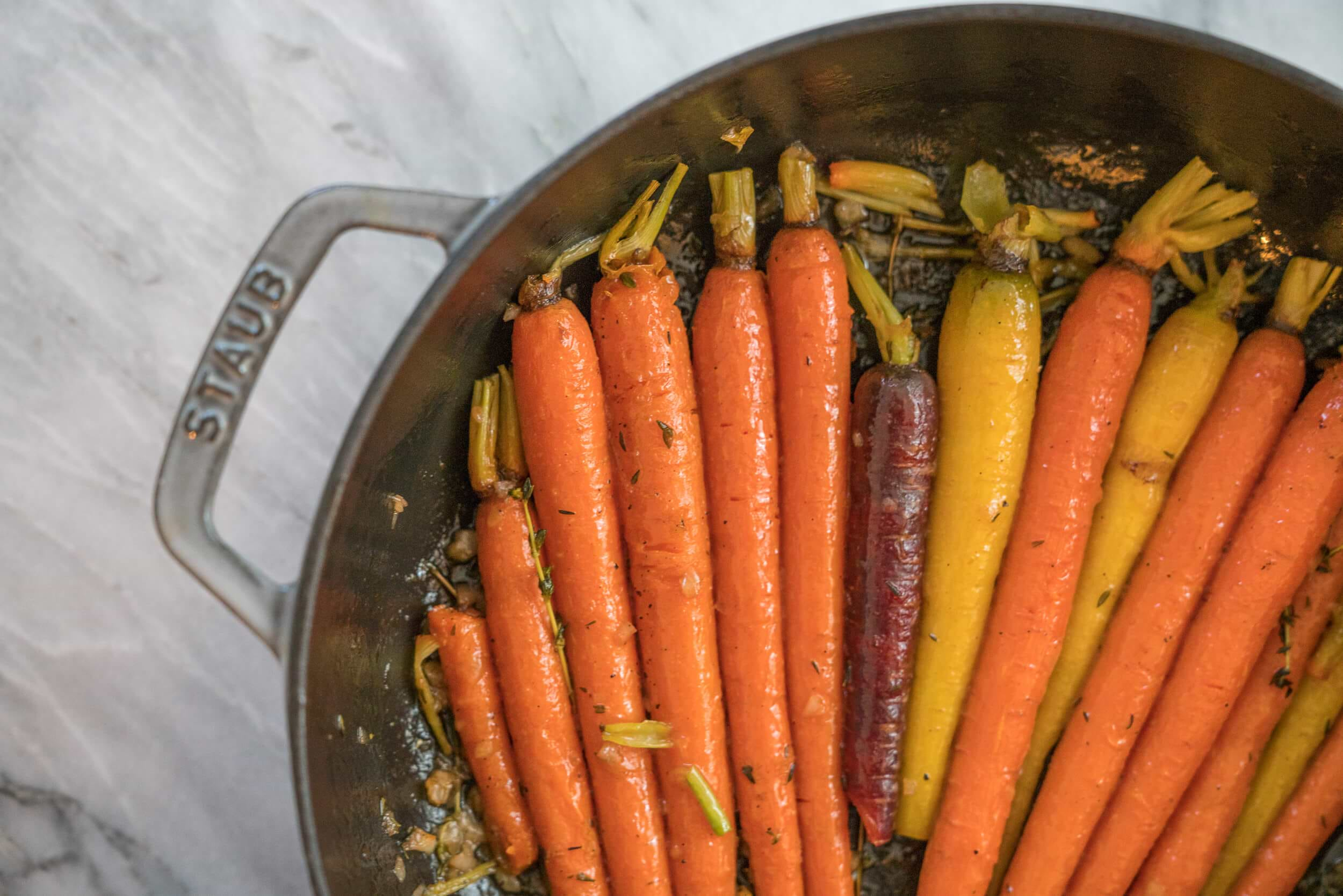
Ghee has many health benefits and has been sadly demonized for decades due to its saturated fat content. However, consuming it moderately, as is the case when using ghee to make my Sticky Carrots or mixing it into your scrambled eggs, has well-researched health benefits.
ADVERTISEMENT

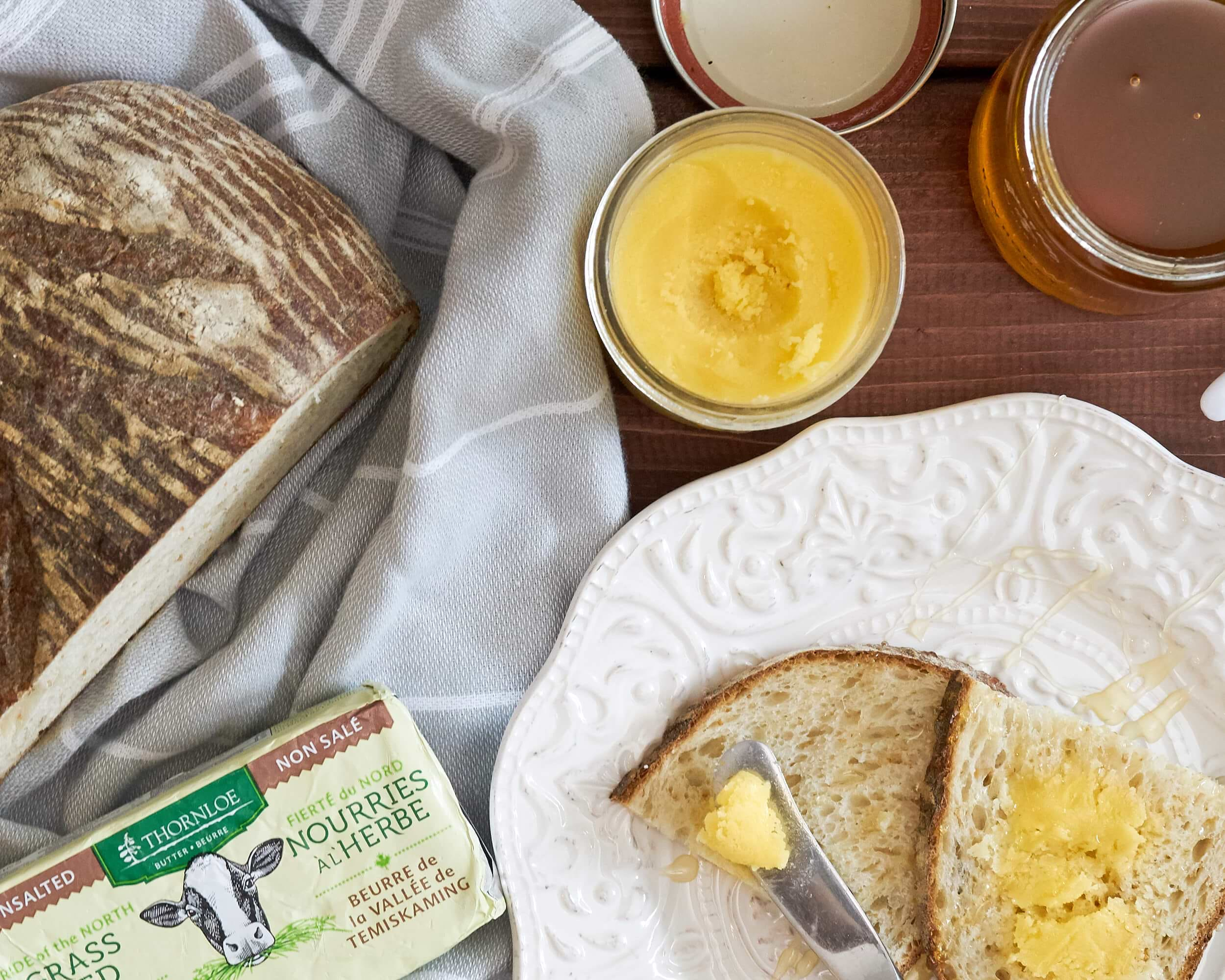
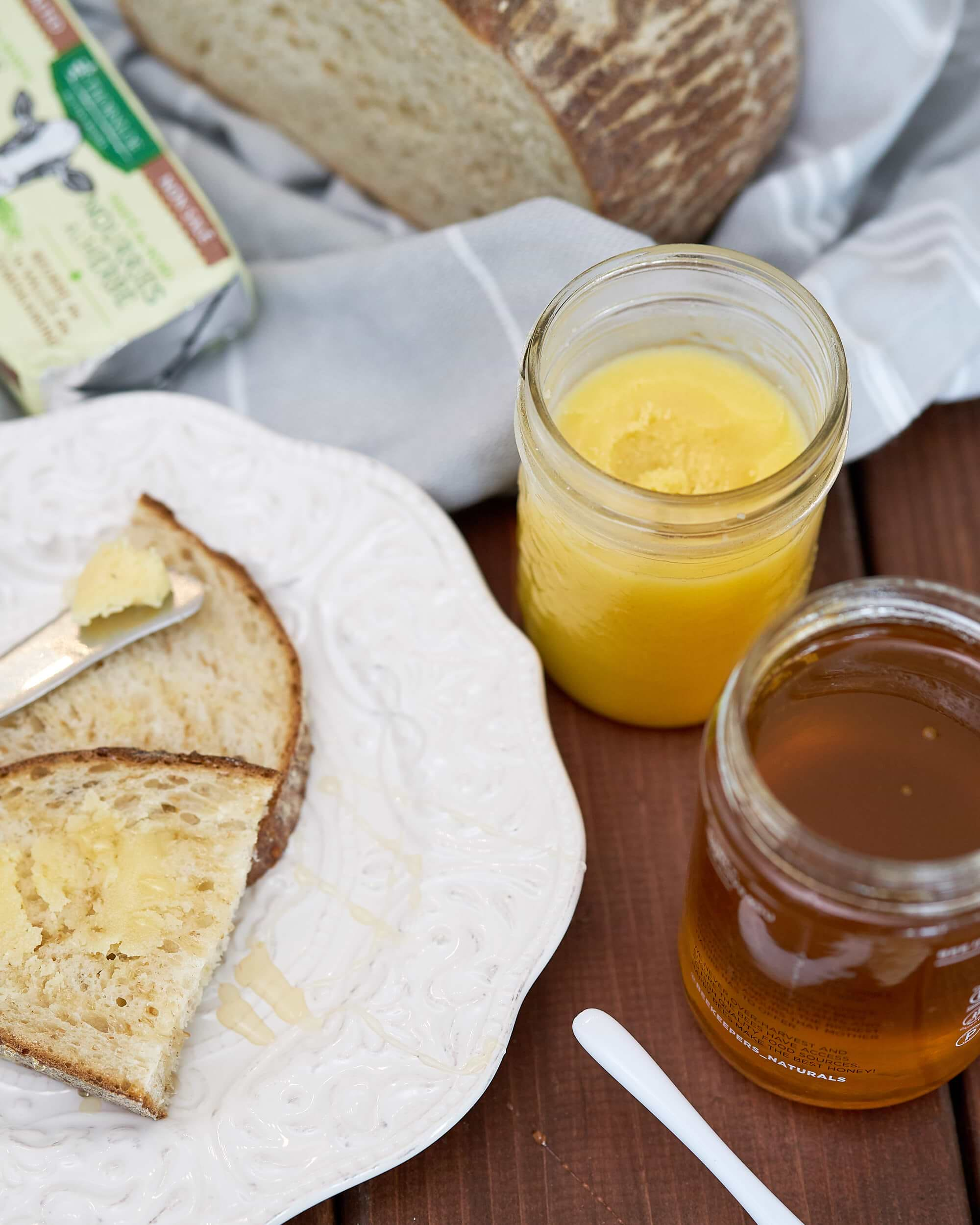
I’ve also made my Rustic Galette crust with ghee and it worked just as well as butter. Be sure to check out all the uses for ghee at the bottom of this post. I personally use ghee for 4 to 5 meals a week. My daughter Vienna loves it too!
Ghee is a highly nutritious food.
Ghee (especially when made from grass-fed butter) is a great source of fat-soluble nutrients, including vitamins A, D, E and K2. Vitamin K2, as I discuss in this video, is incredibly important for bone health. It helps your bones keep the calcium, which is important because you don’t want calcium floating around in your arteries. As I talk about in my video below, it’s a rich source of butyrate, an incredible anti-inflammatory substance for gut health that can help prevent colitis and Crohn’s.
Let’s get back to ghee-making! I make ghee when I find grass-fed butter on sale, but sometimes I buy store-bought ghee, especially when I don’t feel like making it. If you’re choosing between organic butter and grass-fed to make ghee, my preference is grass-fed because it’s more nutrient-dense than grain-fed. The same goes for grass-fed beef when buying meat.
It’s more expensive, for sure, but ideally, cows should be grazing on pasture when grass is available to eat, rather than eating 100% grains. Eating grains will produce more omega-6 fatty acids and eating more grass will produce more omega-3 fatty acids in the animal. If no grass-fed butter or meat is available, my second choice would always be organic.
“Ghee” and “clarified butter” are often used interchangably but there is a slight difference.
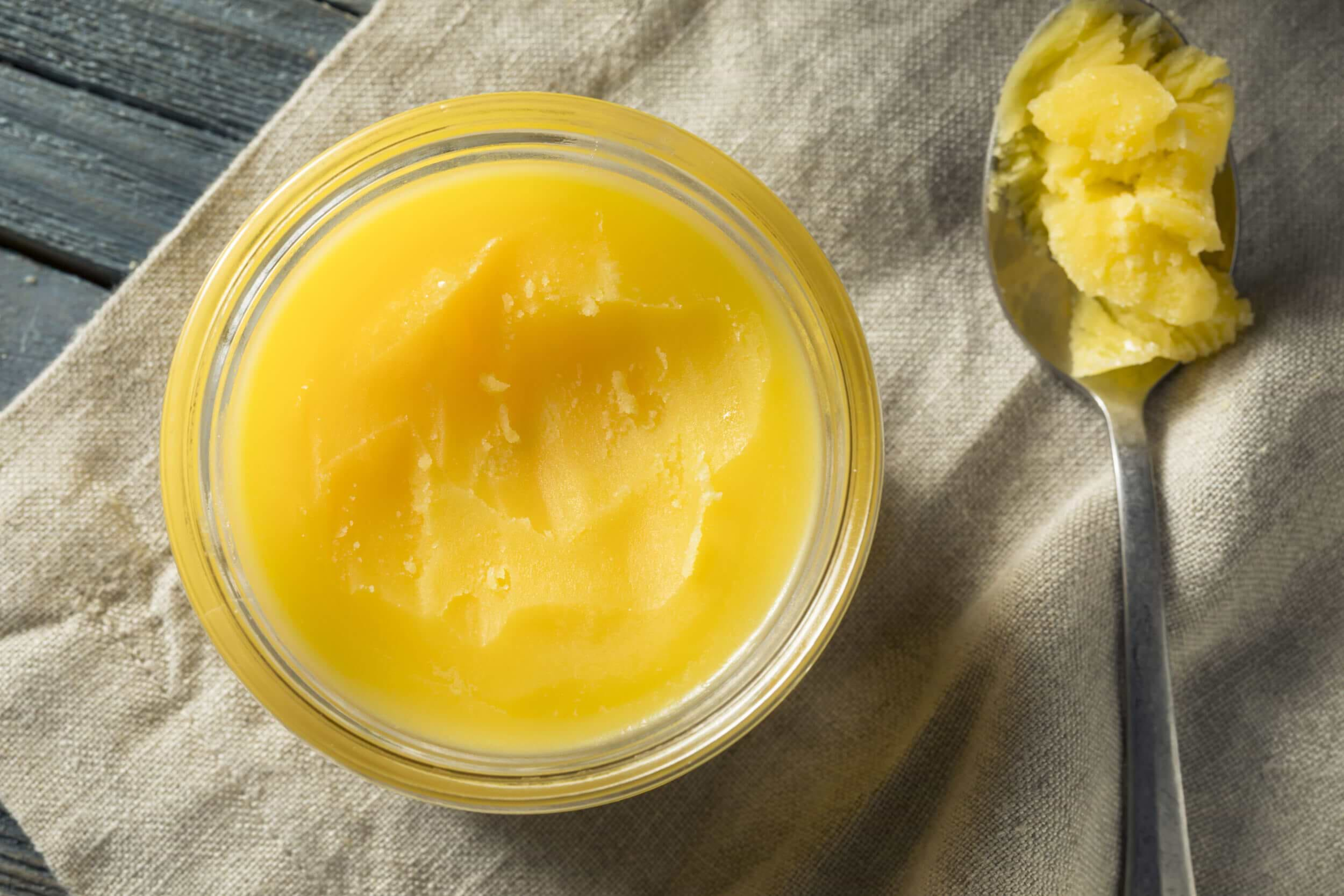
Ghee is simply clarified butter cooked a little longer and has a richer, more intense flavour than clarified butter. You know you’ve got ghee when you see the little brown bits on the bottom of your pot, and it has a fragrant smell and rich flavour. I talk about this more in my video, so you can know what to look for when you start making it!
Don’t be intimidated by making your own ghee, though. If you can melt butter, and you’ve got patience, you can make ghee! But I totally get it, if you don’t want to spend 20-30 minutes at your stove, well then just buy store-bought. There’s nothing wrong with that!
Just be careful when you start making ghee because it heats up quickly and you don’t want to be boiling the crap out of the butter! You’ll lose more of the nutrition that way. Sure, the water in the butter will evaporate more quickly, but it should only take 20-30 minutes if you’re making ghee at medium-low heat.
Just a caution: if you are allergic or very sensitive to dairy, it’s best not to eat ghee because you can’t be sure that 100% of the casein and whey have been removed, even if you strain it 5 times!
Most importantly, here’s the recipe!
Mains & Sides
How to Make Ghee
PrintIngredients
- Unsalted butter (250g)* preferably grass-fed or organic
- Cut butter into small chunks. Place into a medium size stainless steel pot and melt butter on medium/ low temperature. Try not to let the butter boil, but keep it as hot as possible without bubbling up.
- As the butter melts, the white stuff (whey) rises to the top. Using a spoon, scrape off the whey into a bowl. Continue to do this for 10 - 15 minutes.
- Once most of the whey has been scraped off, after about 10 minutes or so, the butter starts to become clear. This is when you have clarified butter but you're not there yet! Just another step to get to ghee.
- Keep the clarified butter hot, continue spooning off the whey and wait until some of the milk fat starts to brown on the bottom of the pot. This is key to a rich tasting, nutty, butterscotch-y ghee!
- Once you've got the brown bits on the bottom of the pot, you've got ghee. Let it cook for a few minutes to soak up that flavour. The ghee is now nice and fragrant.
- Using a wire mesh strainer or nut bag, strain the ghee through to remove any final bits of milk proteins. You can pour it straight into a mason jar. Let cool completely and then store in freezer indefinitely. ENJOY!
*250g of butter, yields 1 cup of ghee.
If you use more butter, you'll have more ghee!
The whole process to make ghee takes 20-30 minutes.
Please read all the instructions before you begin to make the process run smoother.
I recommend using a stainless steel pot so you can clearly see the bottom of your pan and can easily determine when you've got ghee because you'll see the little brown bits at the bottom.
There are many delicious ways to enjoy ghee.
- Use it to sauté vegetables.
- Scramble eggs with it.
- Stir into soups and stews for added flavour.
- Use for pastry crust like my Rustic Kale & Sundried Tomato Galette
- Spread on toast, especially grilled cheese!
- Mix into a hot drink.
- Make my Sticky Carrots.
- Find it in 10 Paleo Staples .
- Use it anytime you’d use butter!
ADVERTISEMENT
How to store ghee
Ghee can be stored in the kitchen cupboard away from sunlight for up to 3 months. I typically store it in the fridge, though, because then it lasts up to a year. It gets harder in the fridge of course, but softens up pretty quickly. It can start to crystallize at the top, but this is normal – no need for concern. It sometimes has a grainy texture when you make it yourself – also normal, so not to worry :).
If you have any questions, please post below. Happy Ghee-making!
xo Joy
29 thoughts on “How To Make Ghee”
Thank you for this recipe Joy. I am on a ketogenic diet since the beginning of August and many recipes mention the use of ghee. Will definitely try making this for future use.
Have been following you and really enjoy your recipes and blogs…
Thanks so much Heather! Yes ghee is an awesome addition to a keto diet 🙂
A suggestion for a much easier way to make ghee I learned from a French master chef. Place the butter into a plastic bag then into a pot of water to melt. Once melted put into refrigerator. When butter becomes hard the milk substantance remains liquid. Simply cut a corner of the plastic bag the milk liquid will drain out leaving you ghee. You may need to scrap more milk produce off the hard butter but it will be minimal. Give it a try.
I am an Ayurveda doctor and you mentioning it here made my day! Adding to all this, ghee is great brain food! In Ayurveda, herbs are added to ghee with water and boiled, that way all the water and lipid soluble extractives go into the ghee and make it a very potent medicine.
P.S. The brown bits taste yummy with a little bit of sugar.
Great to know about eating those brown bits! I’m going to save them next time. Thanks for your comment!
Sounds like a great hack, the only thing I don’t like is putting it into a plastic bag and then into hot water. Thanks for the suggestion though!
Question-if you had your gallbladder removed, would you consider this a healthy fat?
I think it’s important to talk to your natural healthcare practitioner about what fats are best to eat. Also, when eating fats without a gall bladder it would also consider a digestive enzyme. But again, best to talk to your own nutritionist or ND. Hope that helps!
Since I retired, 20-30 minutes is nothing to me, and making my own ghee is much more economical (about 1/3 to 1/2 the cost) than buying it pre-made. I have some of that in my long-term storage pantry, but would love to make my own to use in recipes calling for butter. Since my vegetable garden was destroyed by parasitic nematodes this year, my canning jars are just sitting idle anyway…
I once read the ghee smells quite horrible…..is that true? I’ve never tried it – interested, but a bit scared if true.
Thanks!
Had no idea it was so easy. I read a few recipes that said it should cook for a long time so I thought it was a tedious process.
Hi there wondering about a healthy pots and pans…….what brand do you use 🙂
I have Kitchenaid stainless steel pots, All Clad fry pans and Le Creuset baking dishes. I love them all!
No not at all, it smells delicious actually! It has a bit of a cheese smell but to me, that’s yummy 🙂
Oh how terrible, sorry to hear your veggie garden was destroyed, what a bummer!! You’re right, it’s definitely cheaper. It’s nice to buy for convenience but if you’ve got time then it’s enjoyable to make and always a bonus to save some $$$. Enjoy the ghee-making-process 🙂
Well of course, some people do it for much longer. It’s really up to you. I’ve always followed the 20-30 minute method with great success.
Thank you for clarifying use of ghee. Recently started using it. At some point I am going to try to make it. Thank you Joy😊
Thanks for sharing this great ghee recipe. I like the info about the brown bits as I think I may have made clarified butter only 😊. I used to work at a theatre and I’m remembering the bubbling butter that was probably turned into ghee and takes delicious on popcorn.
Quick questions – how shall I add the herbs to the ghee?
Thanks!
My pleasure! You can add the herbs in once you’ve removed all the dairy protein. They settle to the bottom right away so as it solidifies you’ll have to stir them every so often.
You’re welcome Irma! I hope you make it, enjoy!
Is ghee healthy when you have heart problems ?
I would recommend you speak with your natural healthcare practitioner but yes, it should be fine.
I made this today and it turned out just right! Thank you! I was apprehensive at first, worrying I’d do something wrong (I’m still afraid to make sauerkraut, thinking I might do something wrong and get everyone sick!). Your youtube video of this recipe was just the push I needed to try it. I didn’t have the heat high enough at first, so it took just a little longer but I was patient and watched for those browned bits and was it ever worth the wait!
Thank you again!
Yay glad you tried something you were apprehensive about! And that’s totally okay it took a little longer. It’s so delicious!! I’ve actually been thinking about doing a video on how to make sauerkraut, perhaps in the new year because it’s so easy!
Ghee doesn’t need to be frozen it keeps for hudreds of years without even a fridge.
Well that depends who you ask 🙂 I err on the side of caution but if that’s what you want to do, I say go for it!
What brand of ghee do you purchase when you are too busy to make it?
I’ve been making ghee in the oven in my Le Creuset (uncovered) for over 10 years. So easy and I just leave it alone and it comes out perfect every time.
250 degrees for 2.5 hours. I make a full pound at a time and I take it right out of the fridge or freezer. I don’t even cut it up anymore. The whey proteins sink to the bottom and I never skim. After it cools a bit. I strain it with a metal screen strainer lined with unbleached cheesecloth. I go through a pound or more per month so I just keep it in my pantry. This is liquid gold in my house.
That’s amazing you’ve been making it for many years! I love your method!! Thank you for sharing.